Outsmarting Knee Arthritis: Why Common Surgeries Backfire & How to Heal Joints Naturally
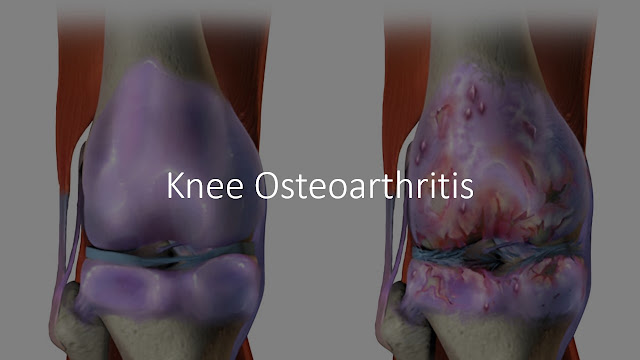
If you are experiencing knee stiffness, cartilage degradation, or persistent joint pain, you don't have to choose between invasive surgery and lifelong disability. By combining the latest orthopedic science, targeted "3D" movement, low-load muscle strengthening, and anti-inflammatory nutrition, you can protect your joint health and outsmart arthritis naturally.
📌 Executive Summary & Key Discoveries
- The Surgery Myth: A 10-year randomized trial shows partial meniscectomy provides no advantage over placebo surgery for degenerative tears and actually triples the rate of subsequent knee replacements.
- Mechanical Multiplier: Every single pound of excess body weight exerts 4 to 5 pounds of extra force on your knees.
- 3D Movement over 1D Gyms: Multi-directional exercises (like doubles tennis) rebuild joint stability, balance, and longevity far better than linear treadmills.
- Low-Load Strength (BFR): Blood Flow Restriction (BFR) training allows you to build joint-protecting muscles using minimal weights without overloading worn joints.
- Supplements & Diet: Glucosamine, chondroitin, boswellia, and curcumin protect existing cartilage, while eliminating high-omega-6 seed oils stops internal joint inflammation.
1. The Myth of the Quick Fix: Why Common Knee Surgery Accelerates Osteoarthritis
When an MRI reveals a meniscal tear in a middle-aged or older adult, surgical trimming (arthroscopic partial meniscectomy) is frequently recommended. However, a landmark 10-year randomized controlled trial published by researchers at the University of Helsinki has exposed what experts call the "bioplausibility trap."
The study tracked 146 adults aged 35 to 65 suffering from degenerative meniscal tears. Half received actual meniscal trimming, while the other half underwent a placebo (sham) surgery. The 10-year results were clear:
"For the vast majority of these patients, the procedure provides no meaningful long-term benefit and should no longer be routinely performed... Removing meniscal tissue from an already degenerating knee may simply accelerate that process."
— Prof. Teppo Järvinen, Principal Investigator, University of Helsinki
The meniscus acts as your joint's natural shock absorber. Trimming away degenerative meniscal tissue reduces the surface area available to distribute weight, concentrating mechanical stress onto already worn cartilage. While true mechanical obstructions (such as traumatic "bucket-handle" tears seen in younger athletes) still require surgical repair, degenerative tears are a normal part of joint aging and resolve best with conservative non-surgical care.
2. Lessons from an Orthopedic Surgeon Who Outsmarted His Own Knee Injury
Dr. Nicholas DiNubile, a renowned orthopedic surgeon, former consultant for Olympic athletes and NFL teams, and editor-in-chief of The Physician and Sportsmedicine, views joint preservation through both clinical and personal experience.
At age 16, a severe football injury shattered his kneecap and tore his collateral ligaments. Standard treatment at the time required keeping his leg in a cast for three months—a approach he now calls "the worst thing you could ever do." The prolonged immobilization withered his surrounding leg muscles and accelerated early patellar arthritis.
Rather than submitting to repeated surgeries or artificial joint replacements, Dr. DiNubile spent 40 years testing non-invasive joint protection principles:
⚠️ Immobilization & Inactivity: The Silent Joint Killers
Resting a painful joint completely causes rapid muscle atrophy and cartilage starvation. Cartilage has no direct blood supply—it relies on movement to pump fluid and nutrients into the tissue. Sitting for more than 8 hours daily without physical activity carries a mortality and joint-degeneration risk equivalent to smoking a pack of cigarettes a day.
3. The 4 Pillars of Non-Surgical Joint Preservation
Pillar 1: Manage Mechanical Load & Weight Multipliers
Of all controllable lifestyle variables, weight management yields the single highest return on investment for knee health. Excess body weight harms knees through two distinct pathways:
- Mechanical Stress: The knee joint acts as a lever. For every 1 pound of weight you carry, your knee experiences 4 to 5 pounds of force during daily walking. Losing just 10 pounds relieves 40 to 50 pounds of impact off your joint with every step.
- Systemic Inflammation: Visceral fat secretes inflammatory cytokines that travel through the bloodstream, directly degrading cartilage tissue throughout the entire body.
Pillar 2: Embrace "3D Fitness" over Linear Workouts
Treadmills, stationary bikes, and elliptical machines train the body in a single, rigid, linear plane (1D movement). Real life, however, requires agility, twisting, stopping, and dynamic balance across three dimensions (3D).
Dr. DiNubile strongly advocates for multi-directional sports—particularly doubles tennis:
- Musculoskeletal Agility: Enhances coordination, balance, and proprioception (your nervous system's internal joint-position sense).
- Longevity Boost: The landmark Copenhagen City Heart Study found that active tennis players gained an average of 9.7 years in life expectancy compared to sedentary peers—outperforming running, cycling, and swimming.
- Joint Adaptability: Playing doubles tennis lowers impact while delivering full 3D conditioning, mental strategy, and social connection that reduces stress.
Pillar 3: Rebuild Muscle Shock Absorbers with BFR / KAATSU Training
Strong quadriceps, hamstrings, calves, and core muscles act as external shock absorbers. However, lifting heavy weights to build leg strength often causes severe pain in arthritic joints.
Blood Flow Restriction (BFR) training (such as KAATSU) offers a solution. By placing specialized pressure bands around the upper leg, BFR partially restricts venous blood return during movement. This temporarily creates a low-oxygen state in the muscle, tricking the body into releasing growth hormone and building muscular strength using extremely light loads (e.g., 3-pound weights instead of 15–20 pounds). This lets you build supportive leg muscle without grinding down vulnerable cartilage.
Pillar 4: Targeted Cartilage Protection & Anti-Inflammatory Diet
While no oral pill or injection can completely regrow destroyed cartilage, targeted clinical nutrition can stabilize existing tissue and reduce joint fluid pain:
- Proven Joint Supplements: High-quality combinations of Glucosamine Sulfate & Chondroitin, Boswellia Serrata, Green Tea Extract, and Curcumin (Turmeric) provide significant anti-inflammatory relief and preserve structural cartilage integrity.
- Eliminate Industrial Seed Oils: Dietary inflammation accelerates joint damage. Eliminating high-omega-6 seed oils (soybean, canola, corn, and sunflower oils) prevents oxidative stress and tissue breakdown inside the joint capsule.
4. Female Biomechanics & ACL Prevention
Young female athletes are up to 8 times more likely to tear their Anterior Cruciate Ligament (ACL) than males due to post-pubertal landing mechanics (upright landing, knee valgus/inward collapse, and quadriceps dominance). A torn ACL increases the risk of developing severe knee osteoarthritis within 10 to 20 years, even if surgically repaired.
The Solution: Structured neuromuscular training programs focused on landing mechanics, hamstring strengthening, and hip stability cut non-contact ACL tears by 50% to 70%.
5. Your Daily Non-Surgical Action Checklist
- Break Up Sedentary Time: Stand, stretch, or walk for 2–3 minutes every 30 to 60 minutes throughout the workday.
- Hit the 150-Minute Weekly Target: Accumulate 150 minutes of moderate, joint-friendly activity weekly (brisk walking, water aerobics, swimming, or yoga). Short 10-minute movement sessions throughout the day add up.
- Incorporate Low-Load Strength Work: Perform leg lifts, bodyweight squats, or BFR/KAATSU training 2 to 3 times per week to protect the knee joint.
- Clean Up Your Diet: Replace inflammatory seed oils with healthy fats (olive oil, avocado, butter) and take daily evidence-based joint supplements.
- Foster a Healing Mindset: Clinical outcomes are heavily influenced by psychological outlook. Collaborate with physical therapists, remain proactive, and stay active within your comfort threshold.
Frequently Asked Questions (FAQ)
Q1: Should I get knee arthroscopy if I have a meniscus tear and joint stiffness?
If you are over 35 and have a degenerative tear, 10-year clinical trials demonstrate that partial meniscectomy offers no long-term advantage over physical therapy or sham surgery, and increases your risk of knee replacement. Conservative management should always be exhausted first unless there is a true mechanical blockage (e.g., a locked knee from a bucket-handle tear).
Q2: Is walking good or bad for knee osteoarthritis?
Walking is beneficial. Regular walking lubricates joint cartilage, strengthens surrounding muscles, and stimulates synovial fluid flow. Start with short 10-minute sessions on flat, cushioned surfaces and gradually increase duration as tolerated.
Q3: How much weight do I need to lose to notice knee pain relief?
Because every pound of weight adds 4 to 5 pounds of mechanical force onto the knees, losing just 5 to 10 pounds can relieve 20 to 50 pounds of pressure off your joints with every step, providing noticeable relief.
Q4: When is knee replacement surgery appropriate?
Total knee replacement should be viewed as a final option when osteoarthritis has progressed to end-stage bone-on-bone contact, conservative movement strategies, weight management, and physical therapy no longer provide quality of life, and daily function is severely restricted.
Take Control of Your Joint Health Today!
Don't let joint pain dictate your life or jump into unnecessary surgeries before exploring non-invasive options. Start with consistent movement, smart strength training, and anti-inflammatory nutrition to preserve your joints for decades to come.
- https://www.theepochtimes.com/health/how-a-surgeon-with-a-damaged-knee-learned-to-outsmart-arthritis-5998399
- https://www.theepochtimes.com/health/one-of-the-most-common-knee-surgeries-may-be-doing-more-harm-than-good-6027765.
- https://articles.mercola.com/sites/articles/archive/2026/08/07/arthritis-physical-activity.aspx.
.png)
.png)
.png)
Comments