9 Best Berberine Supplements (2026 Review): Evidence, Dosage & New EU Safety Data
By Dr Frank Yap, MD | Medically reviewed by the One Day MD Editorial Team | Last updated: August 2026 | Original publication: March 2023
Quick Answer
- A 2024–2025 meta-analysis of 50 RCTs (4,150 patients) confirms berberine modestly but reliably lowers fasting glucose, HbA1c, LDL cholesterol and inflammatory markers in type 2 diabetes and metabolic syndrome — solid, Tier 1a evidence.
- It is not "nature's Ozempic." Semaglutide produces roughly 10–15%+ body-weight loss in trials; berberine averages only about 2–4 lb a month. The mechanisms and effect sizes aren't comparable.
- Typical dosing is 500 mg, 2–3x daily with meals (1,000–1,500 mg/day). Bioavailability — not the milligram number on the label — is the biggest real difference between brands.
- New in 2026: A draft EU/UK scientific opinion (EFSA/COT, March 2026) flagged in-vitro genotoxicity signals, confirmed the CYP3A4 drug-interaction risk, and stated that regulators cannot yet establish a formal "safe intake" for berberine-containing plant preparations. It's a draft under public consultation, not a ban — but it changes the safety conversation.
- Avoid berberine without medical supervision if you are pregnant or breastfeeding, have liver or heart disease, or take statins, immunosuppressants, antidepressants or other CYP3A4-metabolized medications.
This post contains affiliate links, including to the Amazon Associates program. If you buy through them, One Day MD may earn a commission at no extra cost to you. See the full disclosure.
Table of Contents
- What Is Berberine?
- What the Evidence Actually Shows
- Is Berberine Really "Nature's Ozempic"?
- Berberine vs. Metformin
- Bioavailability: Why Form Matters More Than Dose
- How Much Berberine Should You Take?
- 2026 Safety & Regulatory Update
- The 9 Best Berberine Supplements (2026)
- How We Chose These Products
- Personalize This Guide with AI
- FAQ
- Disclosure & Medical Disclaimer
What Is Berberine?
Berberine is a bitter-tasting yellow alkaloid found in the roots, rhizomes, and stem bark of several plants, including Berberis aristata (tree turmeric), Berberis vulgaris (barberry), Oregon grape, and goldenseal (Hydrastis canadensis). It has centuries of use in traditional Chinese and Ayurvedic medicine, mainly for digestive complaints, and has more recently been studied as a metabolic-health supplement — largely because it activates AMP-activated protein kinase (AMPK), the same cellular "energy sensor" pathway targeted by metformin.
Since 2023–2024, berberine has also picked up a social-media nickname — "nature's Ozempic" — that oversells what the evidence supports. We unpack that specifically in the section below.
What the Evidence Actually Shows
Berberine is one of the better-studied botanical supplements for metabolic health, with dozens of randomized controlled trials (RCTs) now pooled into systematic reviews. Below is what the most recent, largest analyses report — graded using the Oxford Centre for Evidence-Based Medicine (CEBM) hierarchy, where Tier 1a (systematic review/meta-analysis of RCTs) is the strongest form of clinical evidence.
| Outcome | Pooled effect | Evidence base | CEBM Tier |
|---|---|---|---|
| Fasting plasma glucose | −0.52 to −0.82 mmol/L | 4 meta-analyses, RCTs, 1,522–4,150 patients (2022–2025) | 1a |
| HbA1c | −0.63% (WMD) / −4.48 mmol/mol | Meta-analyses of RCTs | 1a |
| 2-hour postprandial glucose | −1.16 to −1.57 mmol/L | Meta-analyses of RCTs | 1a |
| LDL & total cholesterol | LDL −0.30 mmol/L; NAFLD subgroup SMD −0.53 to −0.74 | Meta-analyses of RCTs | 1a |
| Insulin resistance (HOMA-IR) | SMD −0.85 to −1.56 | Meta-analyses of RCTs | 1a |
| Liver enzymes in NAFLD (ALT/AST/GGT) | SMD −0.62 to −0.79 | 10 RCTs, 811 patients (2024) | 1a |
| Obesity indices (weight, BMI, waist circumference) | Statistically significant, modest in absolute terms | Systematic review/meta-analysis of RCTs (Int J Obes, Jan 2026) | 1a |
| Overall adverse-event rate | No significant increase vs. control except GI symptoms | Meta-analyses of RCTs | 1a |
CEBM tiers: 1a = systematic review/meta-analysis of RCTs; 1b = individual RCT; 2 = cohort or lower-quality RCT; 5 = expert opinion, mechanistic reasoning, or indirect comparison.
Bottom line: for people with type 2 diabetes, prediabetes, or metabolic syndrome, berberine has a genuinely strong and consistent evidence base for modest glucose- and lipid-lowering effects — comparable in size to some second-line oral diabetes medications, though not to insulin sensitizers used at full prescription dose. It is not a replacement for prescribed diabetes or cardiovascular medication, and none of these trials used it as monotherapy in place of standard care.
Is Berberine Really "Nature's Ozempic"?
Short answer: no, and multiple endocrinologists and dietitians have pushed back publicly on the comparison. The nickname took off on TikTok in 2024 after users reported using berberine as a cheaper alternative to semaglutide (Ozempic/Wegovy) for weight loss. The mechanisms aren't the same — semaglutide is a GLP-1 receptor agonist that suppresses appetite centrally, while berberine's effects run through AMPK activation and gut-microbiome changes — and neither is the magnitude of benefit.
| Berberine | Semaglutide (Ozempic/Wegovy) | |
|---|---|---|
| Typical weight change | ~2–4 lb/month, small single-digit % of body weight | ~10–15%+ of body weight over 68 weeks in trials |
| Regulatory status | Unregulated dietary supplement | FDA-approved prescription drug |
| Mechanism | AMPK activation, gut-microbiome effects | GLP-1 receptor agonism, appetite suppression |
| Cardiovascular outcomes evidence | Not established in dedicated CV-outcomes trials | 20% MACE reduction shown in the SELECT trial |
If you're weighing berberine specifically as a GLP-1 alternative, our separate deep-dive on the SELECT, STEP, SURPASS and FLOW trials covers what semaglutide and tirzepatide actually do and don't do — worth reading before assuming a supplement can substitute for a prescription drug with 20+ dedicated outcomes trials behind it.
Berberine vs. Metformin
Both drugs converge on the AMPK pathway, which is why they're so often compared. But they are not interchangeable, and berberine should never be used to replace prescribed metformin without your physician's involvement.
| Berberine | Metformin | |
|---|---|---|
| Regulatory status | Dietary supplement, no FDA efficacy review | Prescription drug, first-line for T2DM since the 1990s |
| Evidence volume | ~50 RCTs pooled, mostly smaller/shorter trials, largely Chinese cohorts | Decades of large RCTs (e.g., UKPDS) across global populations |
| Common side effects | GI upset (diarrhea/constipation) in roughly 20–30% of users | GI upset; long-term B12 deficiency is well documented |
| Cost | $15–$40/month, out of pocket | Often under $10–15/month generic, frequently insurance-covered |
Some clinicians use berberine as an add-on alongside metformin in patients who want extra glycemic support, but combining the two increases the chance of GI side effects and, in theory, hypoglycemia — see it with your prescriber first. Read our full Berberine vs. Metformin breakdown for the mechanistic detail.
Bioavailability: Why Form Matters More Than Dose
The single biggest limitation of oral berberine is that less than 1% of a standard dose reaches the bloodstream intact — it's poorly water-soluble and heavily broken down by stomach acid and first-pass liver metabolism. This is why manufacturers push doses as high as 1,200–1,400 mg/day and why several newer formulations exist specifically to work around it:
- Plain berberine HCl — the cheapest and most common form. Effective at the doses used in the clinical trials above, but requires the full 1,000–1,500 mg/day split across meals.
- Dihydroberberine (DHB) — a reduced form that converts to berberine after intestinal absorption. A controlled crossover pilot trial found 100 mg of DHB produced a significantly higher blood berberine level (AUC) than 500 mg of standard berberine HCl — roughly a 5x dose-adjusted advantage, though the study was small (n=5) and needs replication.
- Phytosome / liposomal complexes — berberine bound to phospholipids to improve gut absorption. Manufacturer bioavailability claims (e.g., "4x more absorbable") are typically based on the company's own or industry-sponsored pharmacokinetic data rather than large independent trials, so treat exact multipliers as directional, not proven.
- Newer delivery systems (2023–2025) — published human pilot studies on formulations like LipoMicel-complexed berberine reported up to a 6-fold increase in absorption (AUC) versus standard berberine in a small (n=10) trial, and a 2025 silymarin-complexed formulation showed improved pharmacokinetics in early testing. These are promising but still early-stage relative to the ~50-trial evidence base behind standard berberine HCl.
Practical takeaway: a 1,200 mg HCl product and a 550 mg phytosome product may deliver a similar effective dose. Don't judge supplements on milligrams alone — check whether the label discloses the specific berberine form and, ideally, third-party testing.
How Much Berberine Should You Take?
Most clinical trials used 500 mg, two to three times daily (1,000–1,500 mg/day total), taken shortly before meals to blunt the post-meal glucose spike. Dose depends on the form (see above), the reason you're taking it, and individual factors like age, kidney/liver function, and other medications.
You'll often see a "3 weeks on, 1 week off" cycling recommendation online, sometimes justified as reducing gut-microbiome disruption or long-term exposure. This is a reasonable precaution, but it's worth being clear-eyed that it hasn't itself been tested in a controlled trial — the RCTs behind the evidence table above mostly used continuous daily dosing for 8–24 weeks. Cycling is a plausible risk-mitigation habit, not a proven protocol.
Always start at the low end of the range, take it with food, and talk to your doctor before starting — especially if you're on any of the medications listed in the safety section below.
2026 Safety & Regulatory Update
What's new: a draft EU/UK safety review of berberine (March 2026)
In March 2026, the UK Committee on Toxicity (COT) published a discussion paper summarizing a draft EFSA (European Food Safety Authority) scientific opinion on the safety of berberine-containing plant preparations, prompted by an earlier French food-safety agency (ANSES) review. It's a working document open for public consultation, not a finalized regulatory decision or a product recall — but it's the most rigorous safety review berberine has received to date, and it's directly relevant to anyone taking it long-term. Key points:
- ANSES calculated an ultra-conservative "indicative toxicity value" of 1.7 micrograms per kilogram of body weight per day — for a 70 kg adult, that works out to roughly 0.12 mg/day, several thousand-fold below the 1,000–1,500 mg/day used in most supplements and clinical trials. This figure comes from a large (750x) regulatory safety margin applied to a 2-week rat liver-toxicity study, not a demonstrated human harm threshold — but the gap illustrates how far typical consumer doses sit from what toxicologists consider formally "established safe."
- ANSES specifically discouraged berberine supplement use in pregnant or breastfeeding women, people with diabetes, and those with liver or heart conditions — and extended the same caution to children and adolescents.
- Berberine carries an IARC Group 2B classification ("possibly carcinogenic to humans"), based on animal carcinogenicity data and mechanistic evidence that berberine and its metabolite berberrubine can inhibit DNA topoisomerase enzymes.
- The EFSA panel's own March 2026 conclusions: in-vitro evidence of genotoxicity (gene mutation and chromosomal damage) with supporting mechanistic data, though not yet confirmed in vivo at the gut or liver; confirmed CYP3A4 inhibition (drug-interaction risk); and — notably — goldenseal (Hydrastis canadensis) root/rhizome specifically was flagged as showing carcinogenic activity (liver adenomas) in animal studies, a risk not established for other berberine-source plants like Berberis aristata.
- The panel's overall conclusion: current data do not allow regulators to establish a formal "safe intake" for any of the berberine-containing plant preparations reviewed.
What this means practically: it doesn't mean berberine is dangerous at typical doses — the same 2024–2025 meta-analyses in the evidence table above found no significant increase in overall adverse events beyond GI symptoms across thousands of trial participants. It does mean the long-term safety picture is less settled than marketing copy suggests, and it strengthens the case for a few concrete choices:
- Prefer Berberis-species-derived berberine HCl over goldenseal (Hydrastis canadensis)-based products, given the specific animal carcinogenicity signal tied to goldenseal.
- Don't use berberine if you're pregnant, breastfeeding, or giving it to a child or teenager.
- Avoid it, or use it only under medical supervision, if you have liver or heart disease, or diabetes requiring active medication management.
- Tell every prescriber and pharmacist you see that you're taking it — CYP3A4 inhibition means it can meaningfully raise blood levels of statins, calcium-channel blockers, some antidepressants, cyclosporine and other immunosuppressants, and certain antidiabetic drugs (raising hypoglycemia risk when combined).
- Consider a cycling schedule and periodic breaks rather than continuous year-round use, given the incomplete long-term data.
Source: UK Committee on Toxicity, "Draft Scientific Opinion on the Safety of Plant Preparations Containing Berberine," TOX/2026/14 (March 2026), summarizing EFSA's assessment following ANSES's review. Public consultation on the draft closed in early May 2026; final conclusions were not yet published as of this update.
The 9 Best Berberine Supplements (2026)
All nine products below use Berberis-derived berberine (not goldenseal), and all are available on Amazon at the time of writing. Ratings and prices change — check the live listing before buying.
| Product | Form | Dose/serving | Best for |
|---|---|---|---|
| Pure Encapsulations UltraSorb | Phytosome | 550 mg | Enhanced-absorption seekers, sensitive stomachs |
| NutriFlair Premium | HCl + Ceylon cinnamon | 1,200 mg | High-dose value, largest review base |
| Toniiq Ultra High Strength | 82x concentrated HCl extract | 500 mg | Purity-focused buyers (97% claimed) |
| Nutricost Berberine HCl | Plain HCl | 600 mg | Budget, no-frills daily use |
| Doctor Recommended Berberine | Single-ingredient HCl | See listing | Simplicity, minimal additives |
| Thorne Berberine | HCl, NSF-tested | See listing | Third-party quality assurance, clinician brand |
| Nutrivein Premium | HCl + Ceylon cinnamon | 1,200 mg | Twice-daily high-dose users |
| BMVINVOL Berberine | 6-herb blend | From 4,700 mg herb powder | Those wanting a multi-herb formula (harder to dose berberine precisely) |
| NOW Supplements Glucose Support | HCl + MCT oil | See listing | Established GMP-certified legacy brand |
1. Pure Encapsulations Berberine UltraSorb
.jpg)
Given oral berberine's sub-1% bioavailability, Pure Encapsulations built UltraSorb around a berberine phytosome — berberine complexed with phospholipids to improve gut absorption — at 550 mg per serving, a lower headline dose than most HCl competitors. Pure Encapsulations is a well-established practitioner brand with routine third-party testing, which offsets the fact that the company's own "4x more bioavailable" claim hasn't been replicated in an independent published trial. A sensible pick if you want a lower pill burden and don't mind paying more per effective dose.
2. NutriFlair Premium Berberine HCL 1200mg + Ceylon Cinnamon

NutriFlair pairs standard berberine HCl with Ceylon (true) cinnamon rather than the cheaper, coumarin-heavier cassia cinnamon — a meaningful distinction, since high-dose cassia cinnamon carries its own liver-toxicity concern. At 1,200 mg per serving it sits within the clinical dosing range used in the RCTs above, is manufactured in a cGMP facility with third-party batch testing, and has by far the largest review base of any product on this list, which gives more signal (and more noise) than smaller-brand alternatives.
3. Toniiq Ultra High Strength Berberine HCl 500mg

Toniiq markets an 82x concentrated extract with a claimed 97% purity — a genuinely useful spec, since most berberine products don't disclose extract ratio or purity at all. The Berberis aristata source is wild-harvested rather than farmed, which the company frames as a quality signal. As with any purity claim, look for a current certificate of analysis (COA) rather than taking the label at face value.
4. Nutricost Berberine HCl 600mg

Nutricost is a straightforward, no-additive HCl formula manufactured in a GMP-registered US facility. At roughly a third of the per-serving cost of some competitors, it's a reasonable option for people who want a plain, well-tested form and are comfortable taking two to three capsules a day to reach the 1,000–1,500 mg clinical range.
5. Doctor Recommended Supplement Berberine

Despite the brand name, this is a single-ingredient berberine HCl capsule with vegetable-cellulose shells and no proprietary blend — a straightforward choice for anyone who prefers to avoid added cinnamon, fillers, or flavor compounds and wants to control their own dosing schedule.
6. Thorne Berberine

Thorne is one of the few supplement brands with NSF Certified for Sport status across its catalog and a long track record of clinician and hospital-system use, which is meaningful in a category where independent verification is otherwise rare. It's free of the eight major allergens and doesn't include cinnamon or other additives — a good choice if you want the manufacturing-quality signal above all else, even at a premium price.
7. Nutrivein Premium Berberine HCL 1200mg + Organic Ceylon Cinnamon

Nutrivein delivers 1,200 mg of berberine HCl with 200 mg of organic Ceylon cinnamon in an easy-to-swallow capsule size, aimed at people who find high-dose berberine capsules difficult to take. It's manufactured in a GMP-compliant, third-party-tested US facility and is a reasonable mid-tier option between the budget and premium ends of this list.
8. BMVINVOL Berberine Supplement
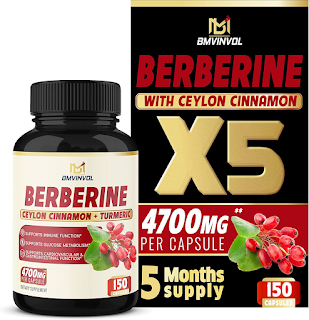
This is a six-herb blend (berberine, Ceylon cinnamon, milk thistle, turmeric, artichoke leaf, and black pepper) rather than a berberine-only formula. The upside is a broader spread of complementary compounds; the downside is that the label doesn't isolate the actual milligram dose of berberine itself, which makes it harder to compare against the clinical trial doses in the evidence table above. Better suited to someone wanting a general metabolic-support blend than someone trying to hit a specific, trial-matched berberine dose.
9. NOW Supplements, Berberine Glucose Support
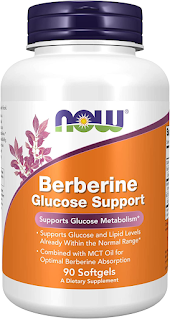
NOW Foods is one of the longest-standing, NPA A-rated GMP-certified supplement manufacturers in the US, with an unusually transparent quality-testing program for a mass-market brand. This softgel formula combines berberine with MCT oil, which may modestly aid absorption of the fat-soluble carrier, though berberine itself isn't fat-soluble. A solid, well-priced choice from a brand with a long compliance track record.
How We Chose These Products
We prioritized products that: (1) clearly disclose the berberine source plant and form (HCl, phytosome, or blend); (2) manufacture in GMP-registered facilities with stated third-party testing; (3) dose within or reasonably close to the 500–1,500 mg/day range used in the clinical trials cited above; and (4) come from brands with an established manufacturing track record rather than newly listed, unverifiable sellers. We excluded goldenseal (Hydrastis canadensis)-based products given the specific animal carcinogenicity signal discussed in the safety section. This is not a paid or sponsored ranking; see our full disclosure below.
Personalize This Guide with AI
You can paste the evidence table, safety section, or product comparison above into an AI assistant to tailor it to your situation. A few starting prompts that work well in Claude, ChatGPT, Gemini, or Perplexity:
- "Given [your medications], which drug interactions from the safety section above apply to me?"
- "I have [type 2 diabetes / prediabetes / no diagnosis] — where do I fall in the dosing range described here?"
- "Compare the phytosome and HCl products in the table above for someone with a sensitive stomach."
AI assistants are useful for organizing and personalizing this information, but none of them can substitute for your own physician's review of your specific labs, medications, and history — especially given the open questions the 2026 EU safety review raises.
FAQ
How much berberine should I take per day?
Most clinical trials used 500 mg two to three times daily (1,000–1,500 mg total), taken with meals. The exact amount depends on the specific product's form — see the bioavailability section above.
Is berberine safe to take long-term?
Short-to-medium-term trials (8–24 weeks) show a good safety profile aside from GI symptoms. A March 2026 draft EU/UK regulatory review concluded that regulators cannot yet establish a formal "safe intake" for long-term use, based on incomplete genotoxicity and repeated-dose toxicity data — see the 2026 safety update above.
Can I take berberine with metformin?
Some people combine them under medical supervision, but doing so increases the risk of GI side effects and, in theory, hypoglycemia. Don't combine them without your prescriber's involvement.
Is berberine really "nature's Ozempic" for weight loss?
No. Berberine's average weight-loss effect (roughly 2–4 lb/month) is a fraction of what semaglutide produces in trials (10–15%+ of body weight), and the two work through entirely different mechanisms. See the full comparison above.
What's the difference between berberine HCl and dihydroberberine?
Dihydroberberine is a reduced form of berberine that appears to absorb more efficiently, based on a small pilot pharmacokinetic trial. Standard berberine HCl has the larger body of clinical outcome trials behind it.
Who should avoid berberine?
Pregnant or breastfeeding women, children and adolescents, and people with liver or heart disease should avoid it or use it only under medical supervision, per the 2026 EU/UK safety review discussed above. It should never be given to infants or newborns.
Does berberine interact with statins or other medications?
Yes. Berberine inhibits CYP3A4 and can also affect CYP2C9 and CYP2D6, which can raise blood levels of statins, some antidepressants, calcium-channel blockers, immunosuppressants like cyclosporine, and other CYP3A4-metabolized drugs. Combining berberine with statins specifically has been linked to increased cardiotoxicity risk in mechanistic studies. Always check with a pharmacist or physician before combining.
What did the 2026 EU safety review actually say about berberine?
A draft EFSA/UK COT scientific opinion (March 2026) found in-vitro genotoxicity signals, confirmed drug-interaction risk via CYP3A4 inhibition, flagged goldenseal specifically for an animal carcinogenicity signal, and concluded that a formal "safe intake" cannot yet be established for berberine-containing plant preparations. It's a draft under consultation, not a ban. Full detail in the section above.
Disclosure & Medical Disclaimer
Affiliate disclosure: One Day MD is a participant in the Amazon Associates program, an affiliate advertising program designed to provide a means for sites to earn advertising fees by linking to Amazon.com. We may earn a commission on qualifying purchases made through links on this page, at no additional cost to you. Product selection reflects our own editorial research and is not paid or sponsored by any brand named above.
Medical disclaimer: This article is for informational purposes only and is not a substitute for professional medical advice, diagnosis, or treatment. Berberine can interact with prescription medications and is not appropriate for everyone, including people who are pregnant or breastfeeding, children, and people with liver or heart disease. Always consult your physician or pharmacist before starting any new supplement, particularly if you take other medications or have an existing health condition.
Clinical Weight Management Portal
Evidence-Based Weight Optimization & Incretin Profiling (2026 Guidelines)
Find & Compare Therapeutic Profiles
Filter treatments based on your personal lifestyle preferences and clinical priorities:
Lean Muscle Preservation Architect
Rapid weight management can cause the body to pull energy from lean tissue. Input your current weight below to compute the clinical targets needed to maintain a healthy 3:1 fat loss to lean-mass loss ratio.
Daily Protein Architecture
Consuming 1.2 to 1.5 grams of protein per kilogram helps sustain your body's muscle protein synthesis while in a caloric deficit.
Target Hydration Blueprint
Incretin-based therapies frequently dampen natural thirst signals. Aim for a steady intake to protect baseline kidney health.
Maintain a 3:1 ratio of fat loss to lean-mass loss. Always incorporate structural resistance training at least twice a week alongside your calculated macro markers to signal muscle tissue preservation.
Prior Authorization (PA) Insurance Navigation
Securing coverage for advanced weight management treatments requires specific documentation. Work through this interactive checklist with your primary care provider:
.png)


.png)


Comments